Why invest in Kosovo
Kosovo is one of Europe's fastest-growing economies and one of its least-known opportunities. Here is the full case, the genuine advantages and the real risks, so you can decide with clear eyes.
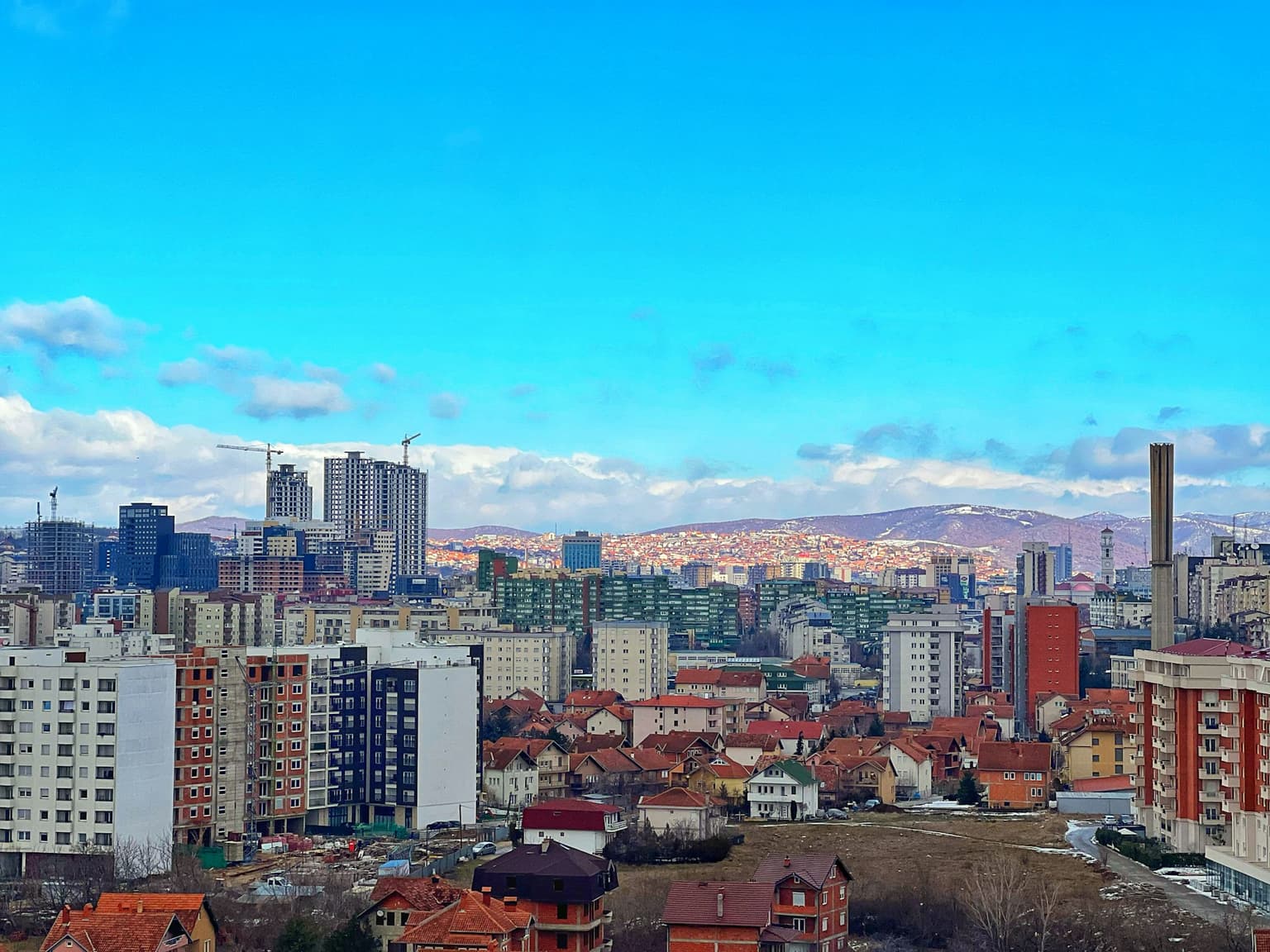
High-rise buildings in Prishtina, Kosovo
Most internationally-minded founders default to Estonia, Ireland, or Cyprus. Kosovo rarely makes the shortlist, and that is precisely the opportunity. On the numbers that matter, low tax, the Euro, EU-aligned law, market access, and cost, it competes with all of them, and on take-home profit it often wins.
Foreign direct investment has been climbing, reaching roughly EUR 850 million in 2024, and the government has been steadily modernising its investment framework. Below is what is genuinely attractive, followed by an honest look at what to watch for.
What makes Kosovo competitive
A flat 10% corporate tax
One of the lowest headline rates in Europe, well below the EU average of roughly 21%, with no additional municipal corporate surcharges.
0% dividend tax for foreign shareholders
Profits distributed to non-resident shareholders leave Kosovo without withholding tax at the shareholder level. This is the single most powerful part of the structure.
The Euro, officially
Kosovo uses the Euro as its currency. No exchange-rate exposure and no conversion friction for businesses operating in European markets.
EU-aligned and visa-free
A Stabilisation and Association Agreement with the EU since 2016, EU-aligned commercial law, and visa-free Schengen travel for Kosovo passport holders since January 2024.
Free-trade access
CEFTA membership since 2007 gives duty-free trade across the Western Balkans, and the EU SAA gives preferential access to EU markets.
More than 20 double-tax treaties
A growing treaty network (more than 20 in force as of 2026 per the Tax Administration's list, including Germany, Switzerland, Austria, the UK, Turkey, the Netherlands, Luxembourg, and Italy) helps avoid being taxed twice on the same income.
A young, capable workforce
One of Europe's youngest populations, with an average age of about 35 at the 2024 census, strong English, and salaries well below Western European levels for comparable skills.
Strategic-investment incentives
The Law on Sustainable Investments (No. 08/L-209) offers investor-care support, public-land leases of up to 99 years, and fast-tracking for qualifying projects, with the strategic-investor threshold lowered to EUR 10 million.
What it means for EUR 100,000 of profit
The combination of a low corporate rate and zero dividend tax is what drives the difference in what you actually keep. Illustrative comparison at the headline rates:
| Structure | Corporate tax | Dividend tax | Net to owner |
|---|---|---|---|
| Kosovo | EUR 10,000 | EUR 0 | EUR 90,000 |
| Estonia (on distribution) | EUR 22,000 | EUR 0 | EUR 78,000 |
| United Kingdom | EUR 25,000 | EUR 0 | EUR 75,000 |
Illustrative only, at headline rates and assuming full distribution to a non-resident shareholder, before any tax in the owner's home country. Your actual position depends on your residence, treaties, and structure. Confirm with an adviser.
The Estonia line deserves its own story: our full Kosovo vs Estonia comparison covers deferral, banking, and where each country genuinely wins. The complete rate card is in taxes for investors.
The honest risks to weigh
Anyone selling you a jurisdiction without naming its downsides is selling, not advising. Here is what to factor in.
Not in SEPA (as of mid-2026)
Euro transfers run through correspondent banks rather than direct SEPA rails, which can add a step. Kosovo's SEPA application is in progress; plan your payment flows on today's rails.
Potential candidate, not an EU member
Kosovo is not in the EU, and five EU states do not recognise it. EU market access comes through the SAA, not membership.
Smaller domestic market
With under two million people, Kosovo is best as an export, services, or regional-hub base rather than a play on domestic consumption alone.
Maturing institutions
Courts and administration are improving but still developing. Good local counsel and clean documentation matter more here than in older jurisdictions.
Frequently asked questions
Can a foreigner own 100% of a company in Kosovo?
Yes. Foreign investors can hold full ownership of a Kosovo company with no local partner, director, or nominee required, and the company can be formed remotely.
What is the corporate tax rate in Kosovo?
Kosovo applies a flat 10% corporate income tax on profits, with 0% withholding tax on dividends paid to foreign shareholders. VAT is 18% standard and 8% reduced.
Is Kosovo in the European Union?
No. Kosovo is a potential candidate for EU membership and operates under a Stabilisation and Association Agreement with the EU. It uses the Euro and has visa-free Schengen travel, but it is not an EU member state.
Is Kosovo part of SEPA?
Not as of July 2026. Kosovo has pre-applied for SEPA and the final application is in progress, but until membership lands, cross-border Euro transfers run through correspondent banking rather than direct SEPA rails. This is a practical point to plan for, not a blocker.
Convinced by the case? The practical next step is understanding the setup itself: how company registration in Kosovo works
Ready to actually do this?
Reading about Kosovo is one thing. Getting a company registered, banked, and compliant is another. That part can be handled for you, end to end.
If you would rather have it handled, the firm we suggest is Rule&Law: Kosovo lawyers who take care of the full company registration and stay on for ongoing legal guidance and support as you operate.
- Free, no-obligation call
- Fully remote setup
- Fixed fees up front